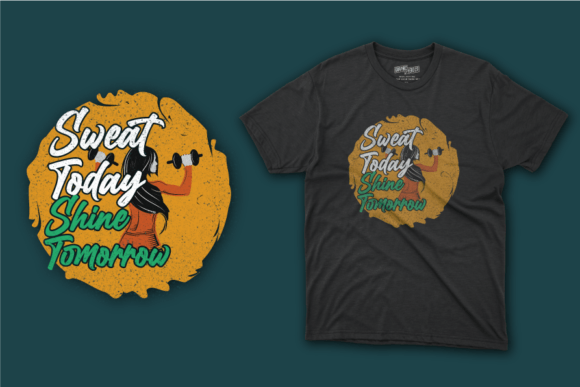
Gym Fitness T-Shirt Design Vector Art: A Stitcher’s Honest Review
I opened the download folder with a mix of curiosity and that familiar pre-project buzz. I’d been searching for a graphic that could bridge bold gym energy and clean embroidery, something for a custom order that actually felt designed for women without shouting clichés. What I found was Gym Fitness T-shirt Design Vector Art, and my first thought was, “This might finally sit right on a structured tote bag or raglan sleeve.” Not every graphic meant for print works in thread, but this one has a confident, no-fuss personality I wanted to test immediately.
The mood it creates is direct, strong but not aggressive. The layout leans toward a focal silhouette or typographic balance that embroidery can respect. It avoids the over-complicated flourishes that often turn into a muddy mess of stitches. Looking at the vector preview, I could already see how the design’s shape would breathe on a flat fabric surface. That alone is half the battle for machine embroidery.
First Impressions: Energy With Everyday Wearability
Right away, the design communicates gym culture without needing a dozen neon dumbbells. It’s a fitness t-shirt graphic, originally created for women, but it has a versatility that could easily stretch into unisex accessories. The composition feels modern and clean-cut; nothing looks like it’s about to fall apart when you reduce the size to fit a five-by-seven hoop. I appreciate when a digital embroidery file source leaves enough breathing room for the stitch engine to interpret negative space as part of the art, not an afterthought.
The collection includes AI, EPS, SVG, and PNG formats. For an embroidery digitizer, that’s a solid starting point. I don’t expect a ready-to-stitch embroidery file from a vector pack, but having crisp SVG and AI paths means I can drag it straight into my digitizing software and start mapping stitch types without fighting a jagged auto-trace. That alone saves a solid half-hour on setup for any machine embroidery design conversion.
How This Design Translates to Stitches
Here’s where the practical part kicks in. I loaded the SVG into Hatch and began testing how the shapes would interpret as filled areas versus satin columns. The design’s moderate level of detail strikes a smart balance. You’re not wrestling with photo-realistic gradients that require twelve shades of taupe; instead, you get clean, distinct zones that convert well into flat fill stitch backgrounds with crisp satin stitch outlines. That’s exactly what you want for products that will be washed repeatedly.
I chose a cotton canvas tote bag as my test project—something I’d actually sell at a craft fair or list on Etsy. My winning scenario was a woman picking it up after a Pilates class, wanting something that looks tailored, not like a freebie gym handout. I sampled the design at about 4.5 by 5 inches, using a mid-weight cutaway stabilizer and a soft polyester thread with a slight sheen. The result was sharp, with no unintended gaps or weird needle perforation on the textured fabric. That’s a good sign for tote bag design projects and anyone planning custom apparel or embroidered patch variations.
Best Products to Pair With This Design
After testing, a few clear winners emerged for real-world use. You could absolutely run this across a soft French terry sweatshirt, and it would hold its presence without puckering if you hoop correctly. I’d confidently place it on:
- Structured totes and canvas bags – great for boutique handmade product lines
- Raglan sleeve sweatshirts – the shape flatters the sleeve curve without distortion
- Fitted women’s tees – keep size moderate, around 4 inches wide, to avoid chest distortion
- Kitchen aprons – especially for a fitness coach’s branded craft business look
- Athleisure caps – works well on unstructured dad hats if you flatten the center seam first
- Pillow covers and tea towels – perfect for a personalized gift or holiday corner in a shop
- Baby onesies – yes, surprisingly cute when scaled down with pastel thread as a playful gift
I can easily see this becoming a small shop product staple for sellers who curate snarky but clean gym-themed items. The design has enough personality to feel like a boutique find rather than a stock graphic, and that’s what builds customer trust on platforms like Etsy. When a buyer sees crisp, well-placed embroidery on a sweatshirt embroidery listing, they’re not comparing you to a print-on-demand mill—they’re seeing craftsmanship.
Where You Should Use Caution
No design is a free pass. I’ve ruined enough blanks to know you must respect a few limits with a graphic like this one. The following situations demand a test stitch and a skeptical eye:
- Very small hoop sizes – under 4 by 4 inches, fine details could close up into blobs
- Thin, stretchy fabrics – a rayon-spandex tee can ripple unless you use heavy water-soluble topper
- Dark or heavily textured fabrics – always check contrast; light gray thread on heather charcoal can lose the design’s definition
- Curved cap fronts – the design’s width may fight the center seam, so consider floating a patch instead
- Layered garments – stitching through a hoodie pocket is asking for trouble; seam-rip and press first
- Ultra-detailed corners – some vector points might translate into needle-stopping density; simplify if needed
- Frequent commercial washing – if this goes on a gym towel, run it through a ten-cycle test before selling
I’d also avoid placing it directly over a side seam or a zipper unless you’re comfortable with in-the-hoop games that often end in broken needles. The applique design potential is there—you could use the main silhouette as a fabric shape and stitch around it—but that’s for an intermediate digitizer ready to add her own placement stitch. For beginners, keep it as a pure embroidery file with solid fill and clean borders.
Small Details That Make or Break This Embroidery
The visual appeal in thread depends heavily on your thread palette selection. I tested two versions: one in matte cotton thread, another in shiny rayon. The matte finish gave a soft, high-end look that worked beautifully for a yoga-inspired tote. The shiny thread pushed the design into a sportier territory, almost vinyl-like, which could be a hit on a nylon gym duffle. The takeaway? This Gym Fitness T-shirt Design Vector Art reacts dramatically to sheen, so swatch your threads before committing to a dozen units for a craft fair product.
Stitch density also needs a manual once-over. Since the original is vector art for print, not a pre-digitized embroidery file, you control the density. I set fill areas at 4.0 mm step and kept satin borders at 0.4 mm width; anything tighter would turn stiff and wear rough. That’s one of those embroidery designer notes that saves a project from feeling bulletproof. A softer embroidery drapes better, looks more professional, and keeps the finished product comfortable against skin.
A Real-Life Project: Testing on a Custom Tote
Let me walk you through the exact project I ran to see if this design would actually sell. I had a client who wanted a personalized gift for her sister, a personal trainer opening her own studio. She wanted a tote bag that looked premium, not gimmicky. I grabbed a 10-ounce natural canvas tote, hooped it with a medium-weight cutaway stabilizer, and used the design centered about five inches wide.
I converted the SVG in my digitizing software, keeping the main body as a fill stitch and the outline as a narrow satin column. I chose a deep plum thread for the main graphic and a warm gold for the accent lines that read almost like motion streaks. The result stopped me in my tracks. It had that luxury boutique feel—something you’d pay $48 for at a fitness studio. The design’s original shape didn’t distort; the curves stayed fluid. I immediately photographed it for my printable mockup gallery to use as a listing preview, because those real-thread photos convert better than any vector preview ever could.
Customer reaction? She cried. Yes, the design itself didn’t do that—the sentiment did—but the embroidery project landed exactly where it needed to: crisp, personal, and undeniably thoughtful. That’s the magic of starting with a well-structured Graphics template and turning it into something stitchable. It made the giftability factor soar.
My Embroidery Designer Notes
After putting this design through the wringer, here are the practical notes I’d scribble on a sticky note before using Gym Fitness T-shirt Design Vector Art again in a paying project:
- Test on scrap first. Always. Even with solid vector paths, your software’s stitch interpretation may need minor tweaks.
- Check thread contrast twice. If you use a color too close to the fabric, the design gets lost. I stick to high-contrast combos for maximum legibility.
- Inspect small details in a black-and-white preview. If the design still reads in monochrome, it’ll survive most lighting conditions.
- Use the right stabilizer. For knits, a no-show mesh plus a topper; for woven bags, a cutaway. Don’t guess.
- Hoop size confirmation is non-negotiable. This design can scale, but always verify it fits your smallest hoop before digitizing.
- Test on both light and dark backgrounds. Some elements may need an underlay stitch on dark fabrics to pop.
- Check your license. Since you’re getting AI, EPS, SVG, PNG files, confirm whether the included Graphic Templates license covers physical finished products for sale. Most do, but never assume.
- Commercial embroidery use? Probably yes. Contact the seller or read the terms to be sure you can sell the finished product on Etsy, at markets, or wholesale.
- Don’t skip the wash test. If a thread bleeds or a stabilizer loosens, you want to know before your customer does.
I also advise keeping a notes file with your digitized DST or PES parameters tied specifically to this design. That way, when you get a repeat order for a boutique branding run, you’re not re-digitizing from scratch. Time is money, especially for creative entrepreneurs juggling multiple listings.
Who This Design Is Really For
I’d hand this design file to a few specific people without hesitation. First, the Etsy seller who wants to offer made-to-order embroidered gym tanks and totes with a clean, empowering look. Second, the apparel decorator looking for a design asset that doesn’t require hours of cleanup. Third, the hobbyist who wants to stitch something for her own workout gear and feel like a boss. It also fits beautifully into baby embroidery if you scale it down and use it as a playful “future fitness fan” piece on a onesie. And don’t overlook holiday embroidery—a Christmas gift for a CrossFit friend, done on a gym towel, would score major points.
This is not the file for someone who wants a fully pre-digitized machine embroidery design ready to load on a USB stick. You must digitize it yourself or hire it out. But if you’re comfortable with that extra step, the AI and EPS files give you a blank canvas that’s cleaner than most hand-drawn sketches. You get to decide stitch angles, pull compensation, and trims. That artistic control is exactly what sets a craft business apart from cookie-cutter merch.
Making the Most of the Digital Files
Beyond embroidery, having the PNG and SVG versions opens a wider door. You can use the Gym Fitness T-shirt Design Vector Art to create printable mockup previews for your shop, print vinyl transfers for shirts that can’t handle dense stitching, or even run it as a screen-printed accent. The digital embroidery file you build from it can become a signature piece across aprons, pillowcases, and caps, giving your product line a consistent thread identity. Just remember that while the vector art is where you start, the final embroidery design is yours to tune.
I saved one version with a subtle underlay that matched the fabric color exactly, so the design appeared to float just slightly above the canvas. That effect made the tote look wildly expensive. Small win, big perception shift. When you’re selling handmade product lines, those tiny decisions stack into buyer engagement and repeat customers.
On a personal note, I’d keep the stitch count moderate. No one wants a chest plate of thread on a lightweight tee. Lean into the design’s athletic spirit by letting the fabric breathe around the embroidery. The result will feel more like a premium athleisure piece than a stiff novelty item. And that’s the kind of professionalism that makes a small business merchandise collection look like a cohesive brand, not a hobby experiment.
In a world full of overdone designs, this one feels refreshingly direct. It doesn’t scream, it states. And in thread, that statement comes through with clarity if you do the upfront testing I described. I’d happily add this to my regular rotation for tote bags, sweatshirts, and thoughtful personalized gifts that land somewhere between fierce and feminine. The vector art gave me the bones; my embroidery sensibilities gave it the soul.