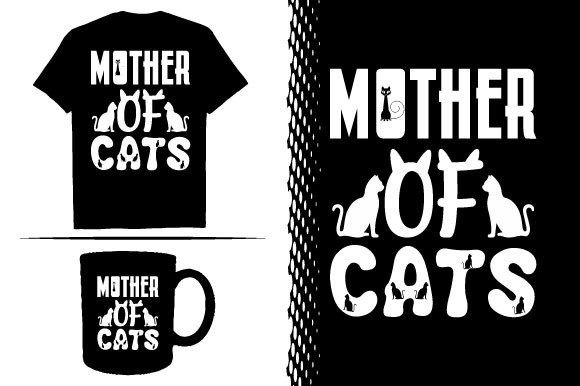
Cat Mom T Shirt Design – An Embroiderer’s First Look
The moment I opened the file, I felt that familiar little buzz of recognition. The Cat Mom T Shirt Design has the kind of cheerful, unfussy personality that makes you start mentally assigning it to projects before you’ve even checked the layers. As someone who reviews embroidery and print assets constantly for craft businesses, I’m looking for more than a cute graphic. I’m asking myself: will this read clearly when stitched on linen? Will a tote bag buyer smile and reach for her wallet? How does it behave when you shrink it for a baby onesie or blow it up for an apron centerpiece? These are the questions that matter, and I want to walk you through exactly what this design brings to the table for handmade products, embroidery conversion, and small shop merchandise.
Immediate Mood and Stitch Personality
The Cat Mom T Shirt Design lands with a gentle, playful energy. Even without seeing every exact detail in advance, a title like that usually signals a combination of clean typography and a cat motif — maybe a graceful silhouette, a quirky paw print, or a minimalist feline face. The mood is unapologetically personal. This isn’t a generic animal vector; it’s a proud statement piece for cat lovers. For embroidery projects, that emotional hook is pure gold. You’re not just stitching a design. You’re stitching identity. The warmth translates beautifully into handmade product lines, especially for craft fairs, personalized gift tables, and Etsy shops where buyer connection is everything.
When I picture this design digitized for machine embroidery design use, I see it leaning into a balance of satin-stitch lettering and a low-density fill stitch for the cat shape. The letterforms in “Cat Mom” are likely to be the focal point, and if they’re smooth and slightly whimsical, they’ll stitch out with a crisp personality. I’d keep the typography on the larger side to preserve clarity, especially on textured fabrics. The visual presence feels approachable rather than fussy — exactly what you want on a custom sweatshirt, a floppy canvas tote, or a snuggly baby blanket.
Why This Design Works for Embroidery-Heavy Product Lines
Let me paint a quick real-scenario picture. Last week I was preparing a batch of embroidered tote bags for a local cat rescue fundraiser. I needed a design that would appeal to volunteers, adopters, and donors — something that felt celebratory without being childish. The Cat Mom T Shirt Design would have been a strong contender. A soft cream tote, the design stitched in deep navy blue with a hint of warm gray in the cat outline: it would look boutique-level polished. Replace the tote with an organic cotton apron for a cat-mom baker, or a denim jacket back panel, and the same design transforms effortlessly.
For Etsy seller buyers, versatility is bankable. This design can shape-shift across a dozen product categories without losing its core appeal. An embroidered patch version on a baseball cap gives off a relaxed streetwear vibe. The same art, sized down and digitized with a light underlay, becomes a tiny, treasured accent on a baby bodysuit. I’ve seen too many embroidery assets that only sing at one size. Based on the kind of composition a “Cat Mom” theme usually carries, this one likely resizes with more grace, though I’d always urge testing at extremes before committing a production run.
How It Performs on Different Embroidered Surfaces
If you’re considering the Cat Mom T Shirt Design for real-life embroidery applications, your material choice will shape the final look dramatically. On a smooth, stable woven fabric — think quilting cotton, linen-blend tea towels, or sturdy canvas — the stitch definition will be highest, and the color saturation will feel rich. On a plush fleece sweatshirt, you’ll get a softer, slightly diffused result that can actually enhance the “handmade cozy” aesthetic, provided your underlay is right and your stabilizer choice keeps everything from sinking into the pile. For dark fabrics, contrast becomes your best friend; I’d test thread colors on a scrap piece of the exact garment before loading the final hoop.
The design’s layout strongly suggests a horizontal or gently arched composition, which naturally suits chest placements on t-shirts, the upper back of a baby romper, or the front pocket area of an apron. It will also work well as a center-chest graphic on a unisex sweatshirt. I’d be cautious on highly stretchy ribbed fabrics or anything with deep texture that disrupts letterform edges. And on small, curved surfaces like the front of a cap, you’ll want to mock up the arc carefully. A design built for flat placement can distort around a cap’s seam unless you digitize with that profile in mind. I often split a design like this into two embroidery files for caps — one for the left and center, one for the right — to keep the registration perfect.
Where to Be Extra Cautious
As a reviewer who has watched hundreds of embroidery files succeed or fail based on tiny details, I always flag the delicate zones. With the Cat Mom T Shirt Design, pay attention to:
- Small hoop sizes — if the lettering scales below 0.3 inches in height, satin stitches can start to chew up thin letter strokes. I’d avoid shrinking this below a 4x4 hoop’s safe stitching area without a dedicated mini-charm digitizing pass.
- Thin or loosely woven fabrics — voile, lightweight jersey, or handkerchief linen can pucker easily. A double layer of cutaway stabilizer isn’t overkill; it’s insurance.
- Dark backgrounds — if the original sublimation mockup shows a light-colored design, you may need to adjust thread colors for visibility. Test black, charcoal, and navy backgrounds with a few thread swaps to avoid a washed-out look.
- Dense stitch areas — if the cat motif includes solid fill blocks or overlapping elements, watch for stiffness. Reducing stitch density by 10–15% in the digitizing software keeps the fabric pliable and wearable.
- Layered garments — hoodies with thick seams, jacket linings, or zippered fronts can fight your hoop. I always baste a sample with the actual zipper pull in place to see if the needle clearance is safe.
The goal is a final piece that looks professionally crafted, not home-craft distressed in the wrong way. Your customers will judge product value and customer trust by how the thread lies against the fabric after the first wash. Stitch-out tests are non-negotiable.
The Commercial Angle for Craft Businesses
From a business perspective, the Cat Mom T Shirt Design ticks boxes that directly affect buyer engagement and giftability. Cat mom content has an enduring, passionate audience. When a customer sees a beautifully embroidered tea towel with this design in a handmade shop, the recognition is instant. They don’t need to read a description; they feel the connection. That emotional speed matters at craft fairs where attention spans are measured in seconds.
For digital embroidery file sellers or digitizers who resell converted formats, this kind of artwork is a smart addition to a collection. It pairs effortlessly with seasonal holiday embroidery lines — imagine a Christmas ornament-shaped patch or a Mother’s Day keepsake hoop art. I’ve also seen designs like this used for boutique branding, where a pet-themed subscription box uses the embroidered logo on welcome note sleeves or reusable totes. The consistency across products reinforces a gentle, personal feel that shoppers remember.
One practical note: while the product description mentions it’s a printable sublimation design with EP format included, that’s actually a good foundation for embroidery digitizers. EP typically indicates an EPS vector file, which means scalable paths and clean lines. I can open it in my digitizing software, trace the shapes, and build a stitch file without fuzzy pixel edges. If you plan to stitch it, you’ll need to convert it to a proper embroidery file format (like PES, DST, or EXP) using digitizing software or a service. But the design’s structure should translate cleanly. Always confirm the license terms before offering embroidered products for sale; many sublimation designers allow personal and commercial physical product use, but don’t assume. A quick message to the designer saves headaches later.
Practical Embroidery Designer Notes Before You Stitch
I keep a short mental checklist every time I work with a new graphic for embroidery conversion. Here’s exactly what I’d run through with the Cat Mom T Shirt Design:
- Scrap test first — use a fabric and stabilizer combo identical to your final product. Run the full stitch-out on a piece at least 6 inches square.
- Thread color contrast — embroidery thread can look different under stitching lights. I check colors under both warm and cool LED lamps to avoid surprises.
- Black-and-white mockup — strip the design to grayscale mentally (or in your software) to see if shapes still read. This tests clarity for distance viewing and low-light situations.
- Hoop size confirmation — even if the design fits your hoop’s field, leave at least a half-inch margin for the hoop’s inner edge to prevent needle strikes.
- Check tiny details — small cat whiskers, decorative dots, or thin outlines might need a switch from satin to single running stitch to avoid thread breaks.
- Test on light and dark fabrics — a design that shines on oatmeal linen might vanish on heather gray. I keep a swatch book of my most-used fabric bases.
- Review stitch density — I default to 4.5–5.0 pts for satin lettering on soft fabrics, and around 28–32 points per mm for fill areas, adjusting based on texture.
- Stabilizer discipline — for knits, a no-show mesh cutaway; for wovens, a medium tear-away. Never skip the topper on fluffy fabrics like terry cloth or fleece.
- Personal vs. commercial clarity — ensure your intended use aligns with the design’s license. This protects your craft business and honors the original artist.
Finishing Touch: Customer Perception and Brand Warmth
There’s something quietly powerful about a Cat Mom T Shirt Design stitched onto a tangible, everyday item. It turns a simple pillow cover into a conversation starter. It makes a farmer’s market tote feel like a statement of affection. In my experience, the designs that perform best in small shops are those that invite a smile before the customer even checks the price tag. This design, with its likely blend of soft cat imagery and proud mama phrasing, generates that kind of warmth without trying too hard. It’s not shouty; it’s a happy murmur from a fellow cat lover.
If you’re building a line of personalized gifts, holiday embroidery items, or just wanting to add a reliable crowd-pleaser to your product lineup, this is a starting point worth mocking up and testing. Pour your attention into the digitizing details, respect the fabric you’re stitching on, and you’ll end up with a finished piece that looks professionally produced and feels genuinely heartfelt. That kind of quality keeps customers returning and makes your handmade presentation feel intentional and trustworthy.
Whether you plan to stitch this on a cozy sweatshirt, frame it in a hoop as nursery decor, or press it onto a ceramic mug using the original sublimation format, the Cat Mom T Shirt Design carries a soft, relatable charm that translates far beyond the screen. Evaluate it as a dedicated crafter, test it thoroughly, and you’ll quickly see why this motif deserves space in your project queue.