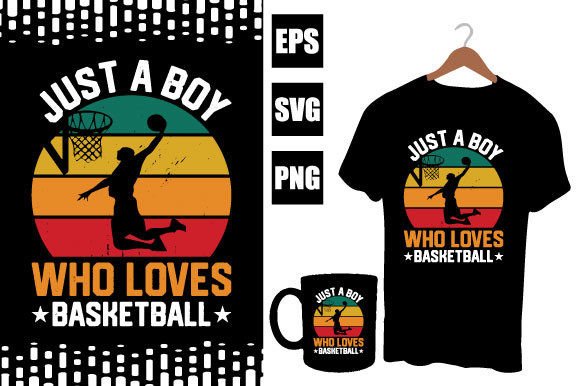
Basketball T-shirt Design: Graphics & Print Templates Review
When I first unpacked the Basketball T-shirt Design, I could immediately feel the court energy. As someone who builds digital product collections for multiple selling platforms, I know that sports-themed graphics can easily fall flat if they lack authenticity or dynamic movement. This one had a clear, bold presence. It wasn’t trying to be cute or overly decorative – it was aimed straight at the athletic niche with a confident, modern edge. The visual personality is aggressive but clean, with lines and composition that suggest motion, competition, and streetball culture. That’s exactly the kind of mood that resonates with coaches, players, and fans who shop for custom sportswear or team merchandise.
From a commercial perspective, this graphic design asset lands in a comfortable intersection between gritty athletic imagery and polished print-ready formatting. The seller describes it as a printable sublimation design, and indeed the file package reflects that intention. When I previewed the elements on a white mockup, the contrast held up well, and the central graphics remained legible even at thumbnail size. This immediately tells me it could perform decently as an Etsy product image or a Pinterest pin, where split-second recognition matters. The niche appeal isn’t huge – it won’t double as a birthday card or a nursery print – but within the basketball and sports apparel segment, it has the right tone to attract a specific, motivated buyer.
First Testing Impressions of the Digital Product
Before adding any new design asset to my commercial rotation, I run it through a quick triage. I opened the provided files on my standard work setup. The package contained multiple formats – I noticed PNG with transparency, a vector source, and at least one ready-to-print version. The transparency on the PNG was clean around complex edges, which is critical for overlaying on different apparel colors without white halos. I also imported the SVG design into Cricut Design Space and Silhouette Studio to check node counts and cutting paths. It was reasonably clean, though some intricate internal gaps might need a weeding box for small decal projects.
The description originally says, “✨ This is My New Basketball T Shirt Design, Printable Sublimation Design.. ✨ You can use them for creating products such as 🎁 Sublimation 🎁 T-Shirts 🎁 Mugs This design contains the following formats 🎁” – and while the wording is raw, the promise is honest. The asset is built for heat transfer and sublimation work, and the composition doesn’t rely on tiny photographic details that would disappear under a heat press. Instead, it uses strong silhouettes and stylish graphic elements that hold up when scaled onto a mug, a hoodie, or a tote bag.
Using the Basketball Graphic for Sellable Merchandise
In the world of print-on-demand, seeing a design on a screen versus seeing it on a physical product mockup are two completely different realities. I placed this Basketball T-shirt Design onto a black garment mockup first. The contrast popped beautifully – it turned a plain tee into something that looked like team-issued gear. On a white shirt, the darker elements grounded the design, but I slightly tweaked the saturation to ensure the ink preview didn’t look washed out. For mugs, a wrap-around preview showed the graphic could extend naturally; I’d probably scale it to 85% to avoid seam distortion on 11oz mugs.
What makes this printable design commercially interesting isn’t just the visual appeal alone. It’s the fact that it can be used across multiple product types without feeling forced. T-shirts are the obvious home, but the same design, slightly adjusted, can live on a sublimation phone case, a gym bag tag, a digital download for a fan poster, or even a Canvas print for a bedroom. That versatility increases the number of possible listings you can create from a single investment, which improves your shop’s content density without overwork.
How the Design Performs in Product Presentation and Store Branding
When I load this basketball graphic onto a mockups website to generate listing previews, something interesting happens. It photographs well. Even on a standard mid-gray sweatshirt, the design maintains its identity and doesn’t blend into the fabric shadows. That’s important for thumbnail appeal – many marketplace buyers scroll on mobile, and your thumbnail is your first (and often only) chance to click. An asset with a strong silhouette, like this one, tends to produce thumbnails where the central subject is immediately recognizable, even at 150px wide.
I’ve found that visual consistency across a shop builds customer trust. If I were building a sports-themed digital download collection, I’d want elements that share a similar graphic DNA. This Basketball T-shirt Design pairs well with other bold, monochrome-heavy designs, and it can also be recolored to match team brand colors. That adaptability supports brand identity without locking sellers into a single palette. For social media promo posts, cropping a detail from this design to use as a blog graphic or an Instagram story background can create a cohesive visual language across platforms.
Testing Across Products: Where It Shines and Where Caution Is Needed
This design excels on large printable products. A full-front hoodie print, a tote bag center panel, a wall art poster, or a sublimation aluminum sheet all benefit from its generous proportions and balanced negative space. It also works surprisingly well as a screen-printed-style graphic on crewneck sweatshirts. In mockup templates and digital product previews, I’d prioritize compositions that fill about 60-70% of the printable area; that scale preserves detail without looking cramped.
There are, however, boundaries to respect. I would not use this as a sticker design below two inches. The internal fine lines, while crisp in vector form, begin to merge visually at tiny sizes when printed with inkjet or UV coating. Similarly, if you’re creating sublimation tumbler wraps, be mindful of how the design warps around a tight curve. Some textural elements might become muddy against the background. For Cricut crafters doing heat-transfer vinyl on a mini-pouch or a phone wallet, you’ll need to simplify cutting paths by welding scattered elements into larger connected shapes; otherwise, weeding becomes unnecessarily painful.
Another point worth mentioning: this graphic is not ideal as a tiny website icon or an extreme low-resolution blog badge. The composition is meant to be seen. Don’t shrink it into oblivion. Instead, use it where it can breathe – think product mockups, presentation boards, or carousel slides on Etsy where the image is at least 1000px wide.
Practical Seller Notes Before Listing the Design Commercially
I always recommend running a printable design through real-world tests before publishing. For this Basketball T-shirt Design, I printed a sample on a sheet of heat transfer paper using an Epson printer set to high-quality matte. The blacks came out dense but without plugging, and the overlapped elements maintained slight transparency where intended. That is a good sign. If you’re selling digital downloads, check the final PNG export at 300 DPI, and confirm that the embedded color profile is sRGB; browsers and POD platforms will thank you.
Organize your customer-facing files clearly. I would rename the folder structure so buyers see simplified titles like “Basketball_Design_PNG_300dpi” and “Basketball_Design_SVG_cut”. When dealing with multiple formats, a clean zip file reduces support tickets. For those who plan to sell sublimation designs, include a print guide image that shows approximate color placement on a shirt. That small addition improves perceived value dramatically.
Typography pairing is another step I don’t skip. If I were building a Canva template for team events, I’d match this graphic with a bold sans-serif like Montserrat for player names, or a slightly distressed display font for a vintage gym feel. A thin script font might get lost against the graphic’s weight, so I’d lean toward heavier, sport-focused lettering. During testing, layering a white outline around text on a busy section of the design helped readability.
Checking the Commercial License and Scaling Your Product Range
Before you add any graphic to your shop, confirm what the commercial license permits. This asset is listed under Print Templates and Graphics, and the description implies it’s intended for creating physical products for sale. I would still verify whether the license covers unlimited prints, whether you need to credit the designer, and if you can alter colors and sizes. Most importantly, understand if you’re allowed to resell the design as a standalone digital file or if it must be incorporated into a new physical product. Following these rules protects your shop from potential takedowns and keeps your business sustainable.
A single strong sports design can anchor an entire niche collection. Consider bundling this basketball graphic with a locker-room tag, a victory phrase SVG, and a coach quote design. When you list them as coordinated product groups, you increase average order value and give buyers a reason to return. The same design could also be repurposed as a Canva template for basketball clinic flyers or team roster sheets, expanding into a small business branding opportunity that generates more revenue streams from the same core asset.
Final Use-Case Recommendations for Creative Sellers
To sum up my hands-on evaluation, this Basketball T-shirt Design is a solid, commercially viable printable design that fits neatly into the sports merchandise space. It’s not a universal clipart piece – it has a specific look and a specific audience – but if you cater to basketball lovers, athletes, or streetwear fans, it’s a resource worth the disk space. Test it thoroughly on a black mockup and a white mug; the difference in visual impact will teach you exactly how to frame your product listings for maximum click-through potential.
For crafters using Cricut Maker or Silhouette Cameo, inspect the SVG cut path carefully before mass-producing decals. For print-on-demand sellers, run a sample print to check ink density. For digital paper pack or sticker design creators, isolate select parts of the graphic to create coordinating accent elements. This design offers more than one path to profit, and that flexibility is exactly what experienced sellers look for when curating design assets for an online shop.
If you are building a creative marketplace presence, I’d slot this into a sports-themed bundle, test it extensively as described, and then push it live with clear, high-resolution mockup photographs. When presented thoughtfully, this graphic design asset can elevate a standard t-shirt listing into something that feels like premium team gear – and that’s the kind of listing that earns repeat customers.